
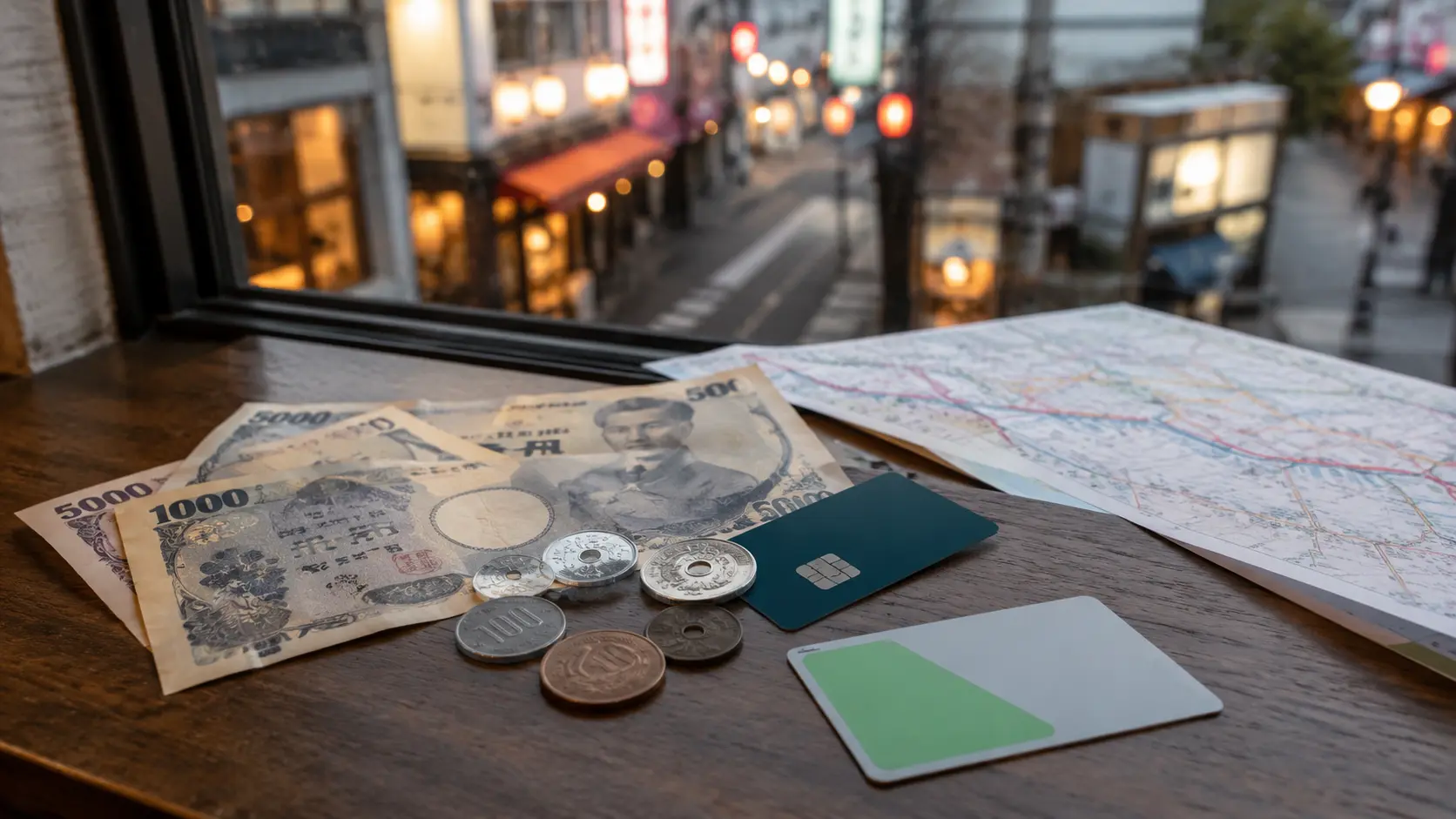
Yes, you should carry some cash in Osaka but you do not need to pay for everything with it. Credit and debit cards are widely accepted at hotels, department stores, convenience stores, major attractions and many restaurants. An ICOCA card makes local transport and small purchases easier. Cash remains useful at small restaurants, market stalls, older ticket machines, temples and businesses that do not accept international cards.
For most visitors, the simplest setup is:
- One physical Visa or Mastercard, plus a backup card
- An ICOCA or another compatible IC travel card for local transport
- Around ¥5,000–¥10,000 per person in cash as a practical backup
That amount is not a required daily budget. It is enough to cover several small meals, local purchases or a payment problem without carrying excessive cash.
Osaka payment methods at a glance
Payment method | Best for | Do not rely on it for |
|---|---|---|
Credit or debit card | Hotels, department stores, larger restaurants, attractions and major retailers | Every small restaurant, market stall or older machine |
ICOCA or compatible IC card | Metro, JR, private railways, buses and participating convenience stores or vending machines | All shops, long-distance reservations or businesses without the IC logo |
Cash | Small restaurants, market purchases, temples, older machines and emergencies | Large hotel bills or expensive shopping when a card is safer |
Mobile wallet | Quick payment where the relevant card or IC system is supported | A universal replacement for a physical card and yen |
The important distinction is that card acceptance and IC-card acceptance are not the same thing. A restaurant may accept Visa but not ICOCA. A vending machine may accept ICOCA but not a foreign credit card. Look for the payment logos at the entrance, register or machine.
Are credit cards widely accepted in Osaka?
Cards are widely accepted in the parts of Osaka most visitors use. Hotels, shopping centres around Umeda and Namba, convenience stores, chain restaurants, museums and larger attractions generally accept major cards. Visa and Mastercard usually provide the broadest international acceptance, although individual cards can still fail.
You are more likely to need cash at:
- Small independent restaurants and bars
- Counter-style shops with ticket vending machines
- Traditional shopping streets and market stalls
- Older cafés, family-run businesses and small souvenir shops
- Some temples, shrines and low-cost admissions
- Coin lockers, laundry machines and vending machines without cashless readers
Do not assume a business accepts cards because it appears on Google Maps or a booking platform. Payment policies can change, and some venues accept cards only above a minimum purchase or only at particular counters.
Always bring a backup card
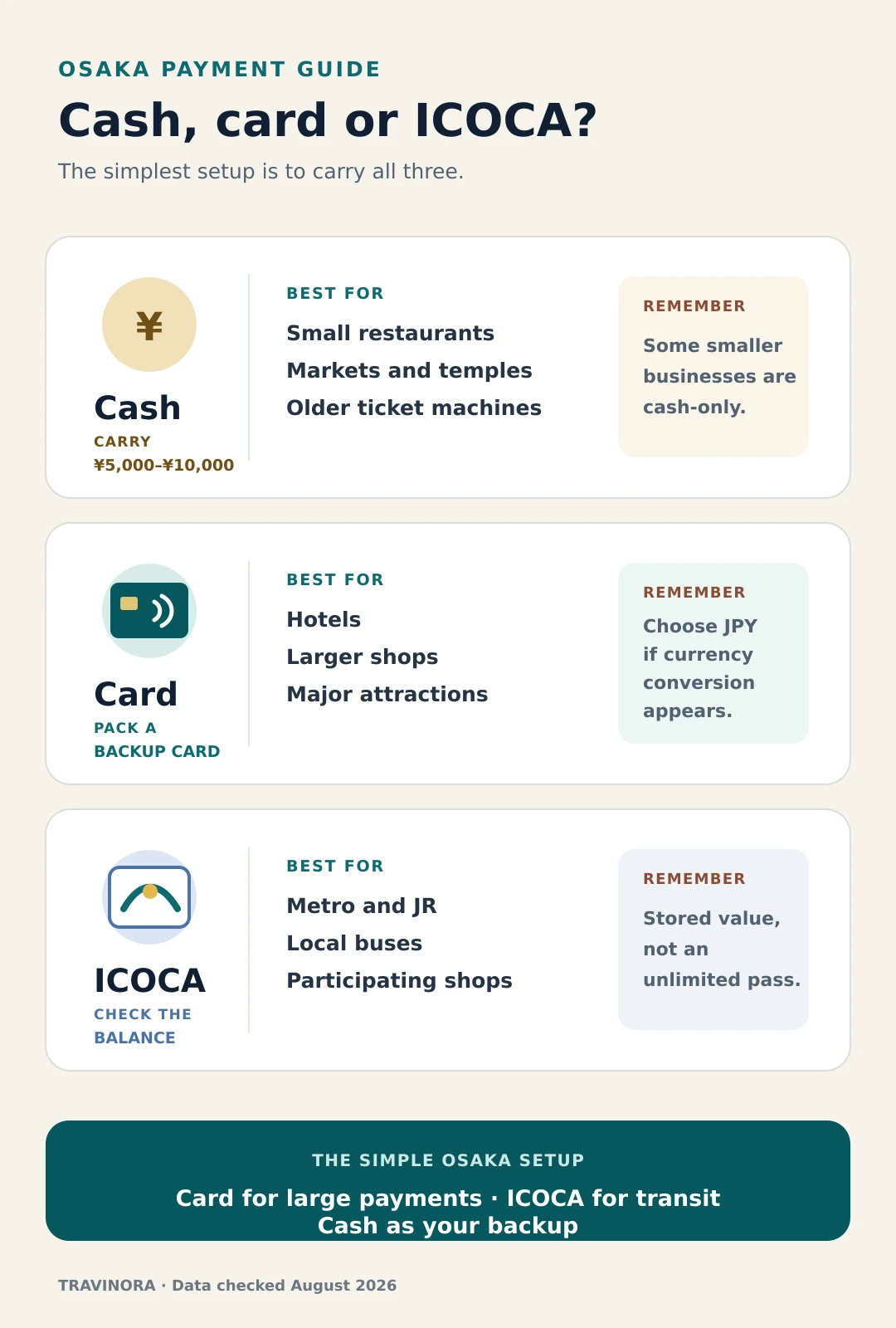
A foreign card can be declined even when the merchant displays its network logo. Possible causes include the issuing bank’s fraud controls, an offline terminal, a damaged chip, a PIN requirement or a temporary communications problem.
Carry a second card from a different network or bank and keep it separately from your main wallet. Before travelling, check that overseas transactions and ATM withdrawals are enabled and that you know your PIN.
When a terminal offers to charge you in your home currency instead of Japanese yen, compare the rate carefully. Paying in JPY normally allows your own card provider to perform the conversion, while the home-currency option may include an unfavourable exchange rate.
What is ICOCA, and do you need one in Osaka?
ICOCA is JR West’s rechargeable IC card. Tap it at the ticket gate when entering and leaving participating train or Metro services, and the correct fare is deducted from its stored balance. It also works on many buses and at participating shops, convenience stores, lockers and vending machines displaying the IC or ICOCA logo.
You do not strictly need ICOCA: individual rail tickets are available. But for most visitors taking several journeys, an IC card removes the need to calculate and purchase a separate ticket every time.
ICOCA is especially useful in Osaka because visitors commonly move between services operated by Osaka Metro, JR and private railway companies. Compatible Japanese IC cards such as Suica or PASMO can also be used on many Osaka services, so you usually do not need a new card if you already have one from another part of Japan.
What ICOCA does and does not cover
ICOCA is useful for:
- Osaka Metro journeys
- JR local services, including many journeys around Osaka
- Participating private railways and buses
- Small purchases where the IC logo is displayed
ICOCA is not:
- An unlimited-travel pass
- A guaranteed discount on each journey
- A substitute for every reserved or limited-express ticket
- Accepted by every retailer or restaurant
Think of it as a stored-value payment tool, not an Osaka sightseeing pass.
Buying and topping up ICOCA
Physical ICOCA cards are sold through eligible JR West ticket machines and counters. Standard cards generally include a refundable deposit; visitor-specific products can have different eligibility and sales conditions. JR West also offers ICOCA in Apple Wallet for compatible iPhones and Apple Watches.
Keep cash available when buying or recharging a physical card at a ticket machine. Do not wait until the gate rejects a low balance during rush hour: check the balance after tapping out or recharge before the day’s first journey.
If you are considering a transport or attraction pass instead, compare it with your actual route. A pass is only better value when the included operators and attractions match your plans. ICOCA prioritises convenience rather than unlimited travel.
How much cash should you carry in Osaka?
For an ordinary sightseeing day, ¥5,000–¥10,000 per person is a sensible cash reserve. You may spend much less if your hotel, attractions and larger meals are paid by card. Carry more only when you know you are visiting cash-heavy businesses, shopping at markets or paying for several people.
Travel style | Suggested cash reserve | Why |
Mostly card payments | ¥5,000 per person | Covers small meals, machines and an unexpected card refusal |
Markets and independent restaurants | ¥8,000–¥10,000 per person | Provides more flexibility for several small cash purchases |
Family or group payer | ¥10,000–¥20,000 total | Useful when one person covers meals, tickets or transport top-ups |
Major expenses already prepaid | ¥5,000 per person | A backup rather than the main trip budget |
These figures are planning suggestions, not predicted daily spending. Osaka can be inexpensive or costly depending on restaurant choices, attraction tickets, shopping and tours.
Carry a mixture of notes and coins. A ¥10,000 note is normal, but a tiny restaurant or low-value machine may be easier to use with smaller denominations. Convenience stores can be useful places to make an ordinary purchase and receive change; do not treat a small business as a currency-exchange counter.
Where will you probably need cash in Osaka?
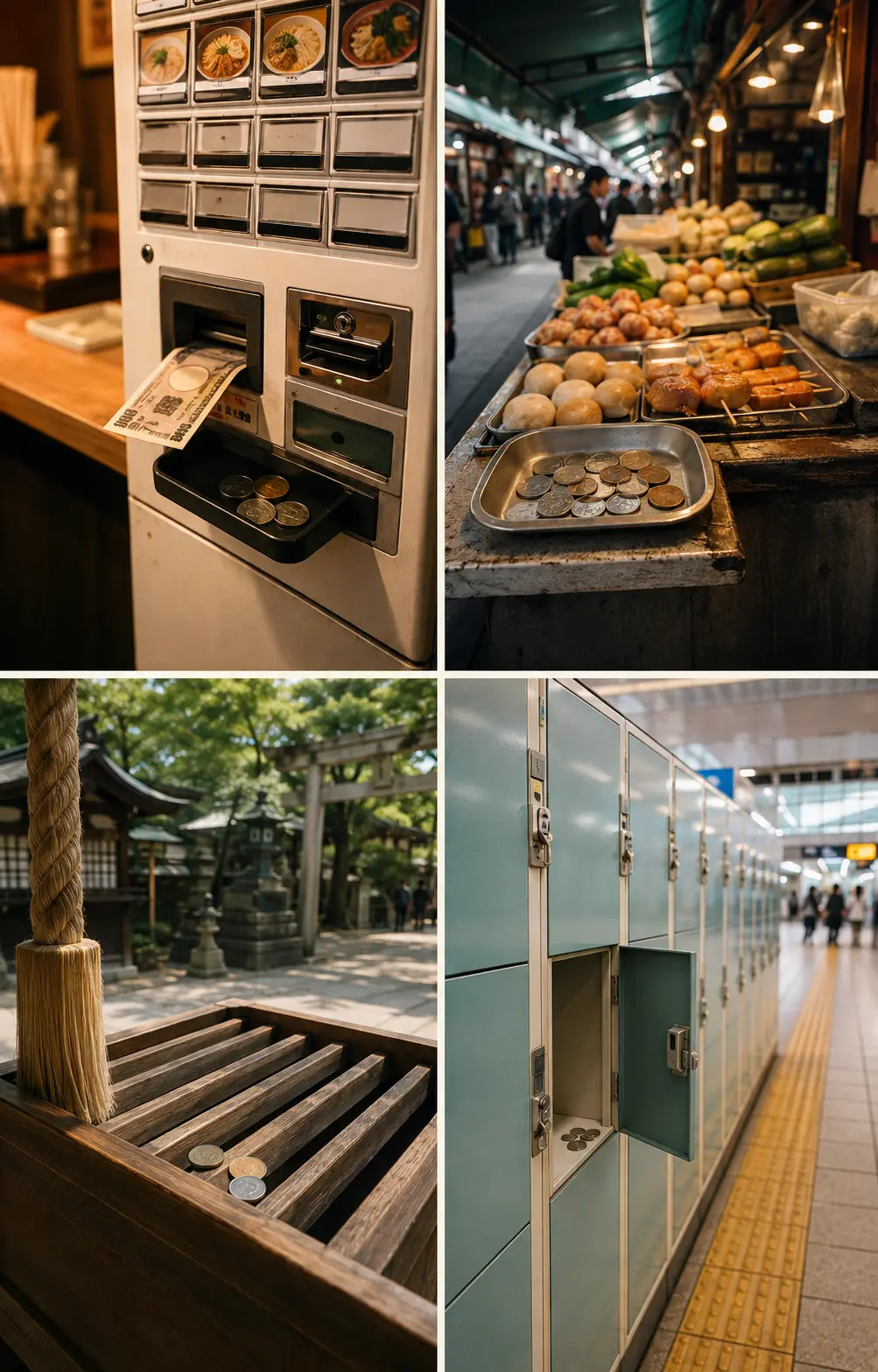
Small restaurants and ticket machines
Some ramen shops and casual restaurants use a machine near the entrance. You select the dish, pay, receive a ticket and give it to the staff. Newer machines may accept cashless payment, but older ones can require notes or coins.
This is one reason to keep cash accessible when exploring Namba, Ura Namba, Shinsekai or smaller streets away from major shopping centres. Ask before ordering if the payment method is unclear.
Kuromon Market and shopping streets
Kuromon Market contains a mixture of payment systems. Some established sellers accept cards or mobile payments; smaller purchases may be cash-only. Check the displayed price and payment method before ordering, particularly for seafood sold by weight or premium items.
The same mixed pattern applies to independent shops in covered arcades and traditional shotengai. Large retailers at Shinsaibashi or Umeda are much more reliably card-friendly than every individual merchant.
Temples, shrines and small admissions
Offerings, fortunes, amulets and minor entrance fees are often paid in cash. Larger museums and headline attractions are more likely to accept cards or online bookings, but smaller cultural sites may not.
Coin lockers and laundry
Many modern station lockers accept IC cards, while others still use coins. If you pay with an IC card, remember which card you used because it may act as the locker key. Small laundries and older machines can also require coins.
Where can you withdraw cash in Osaka?
The most dependable options for many international visitors are Seven Bank ATMs, commonly found inside 7-Eleven stores, and Japan Post Bank ATMs at post offices and selected locations. Seven Bank lists support for several major international networks, although it warns that some cards displaying a supported logo may still be rejected.
You can also find international-card-compatible ATMs at airports, major stations, commercial facilities and some other convenience-store chains. Do not assume every domestic bank ATM accepts a foreign-issued card.
ATM fees and withdrawal limits
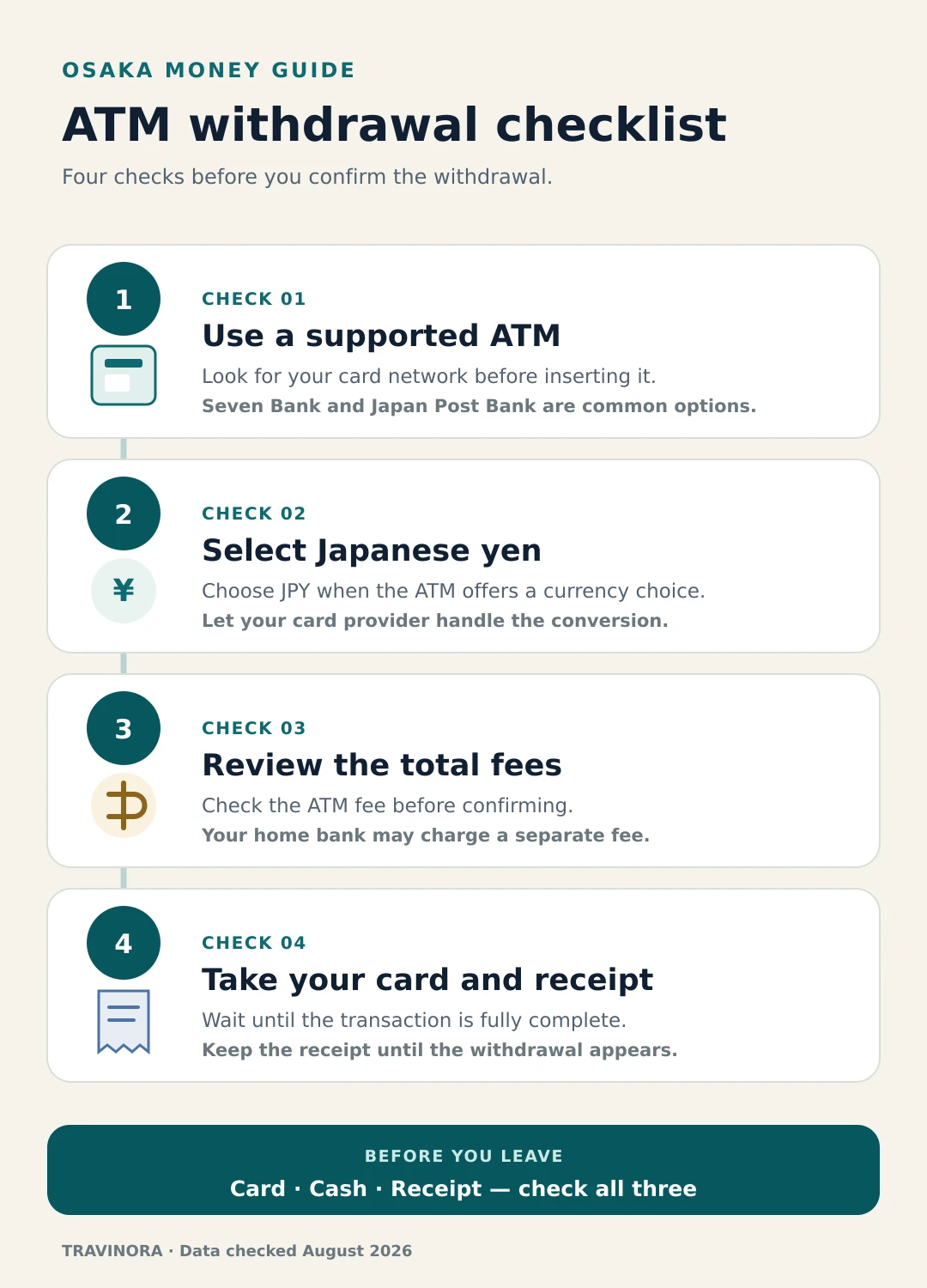
Your withdrawal can involve:
- A fee charged by the Japanese ATM operator
- A fee charged by your home bank
- A foreign-transaction or currency-conversion charge
Seven Bank states that overseas-card fees vary by card brand and that its standard per-withdrawal limit for overseas cards is ¥100,000, with a lower limit for magnetic-stripe transactions. Japan Post Bank notes that a ¥220 usage fee may apply to certain foreign-issued cards, in addition to any issuer fee. Your own bank may impose a lower limit.
Withdrawing one sensible amount can be cheaper than making repeated small withdrawals, but there is no reason to carry your entire trip budget in cash.
What if the ATM asks about currency conversion?
An ATM may offer to convert the withdrawal into your home currency. This is called dynamic currency conversion. Review the displayed rate and markup rather than choosing it automatically. Selecting Japanese yen normally leaves the conversion to your card issuer.
If an ATM declines your card, do not repeat the same transaction many times. Try a smaller amount, confirm the PIN and overseas-withdrawal settings, then use a different supported ATM or contact your bank.
Can you use Apple Pay or Google Wallet in Osaka?
Mobile payments work in many modern Osaka businesses, but compatibility depends on the phone, wallet, linked card and merchant terminal. A contactless symbol alone does not guarantee that every overseas wallet will work.
JR West supports ICOCA in Apple Wallet on compatible Apple devices. This can be convenient for transport and IC-card purchases, but travellers should still carry a physical payment card and some cash. Phone battery loss, account-region restrictions, card-provisioning failures and unsupported terminals can otherwise leave you without a payment method.
Treat a mobile wallet as one layer of your payment setup—not the entire setup.
Should you exchange money before arriving in Osaka?
You do not need to convert your entire travel budget before arrival. Having a small amount of yen when you land can make the airport transfer and first meal easier, particularly if your card or phone does not work immediately.
Compare your local exchange rate with the total cost of an ATM withdrawal. Airport exchange counters prioritise convenience and may not provide the strongest rate. For many travellers, a small arrival amount plus later withdrawals from a compatible ATM is simpler than carrying a large quantity of foreign currency.
Never depend on a single card or on finding the perfect exchange rate after a long flight. The small saving is rarely worth beginning the trip without any usable yen.
A practical payment setup for two days in Osaka
Before leaving your hotel each morning:
- Keep ¥5,000–¥10,000 in your wallet
- Check that your ICOCA has enough balance for the day
- Carry one primary card and one separately stored backup
- Use cards for hotels, larger purchases and bookable attractions
- Use ICOCA for eligible local transport and quick small payments
- Save cash for independent restaurants, markets and machines
This works particularly well for a geographically grouped Osaka itinerary. On a Namba, Kuromon, Dotonbori and Shinsekai day, expect more small food purchases and keep extra cash available. On an Osaka Castle and Umeda day, major attractions and shopping centres are more likely to accept cards.
Use the Osaka travel guide to compare areas and activities before building your route.
Common payment mistakes to avoid
- Assuming “Japan is cashless now” and carrying no yen
- Carrying only one foreign card
- Confusing ICOCA with an unlimited Metro pass
- Discovering an empty IC-card balance at the ticket gate
- Assuming every ATM accepts international cards
- Accepting home-currency conversion without checking the rate
- Withdrawing the entire trip budget and carrying it every day
- Comparing tour prices without checking whether tickets, food and pickup are included
- Expecting to tip restaurant or hotel staff
The bottom line
You do not need to choose between cash and cards in Osaka. Use all three layers: a card for larger payments, ICOCA for transport and compatible small purchases, and yen for cash-only situations.
Starting each day with ¥5,000–¥10,000 per person is a practical buffer for most visitors, not a spending target. With a backup card and access to a compatible ATM, you can avoid carrying large amounts while still being ready for Osaka’s small restaurants, market stalls and older payment machines.
Frequently asked questions
Can you travel around Osaka without cash?
You can pay by card or IC card in many places, but travelling with no cash creates unnecessary risk. Small restaurants, market sellers, temples and older machines may require yen. Carry a modest backup amount even if you expect most spending to be cashless.
Is ICOCA better than buying individual tickets?
ICOCA is usually more convenient because it calculates eligible local fares automatically when you tap in and out. It does not necessarily make each journey cheaper and is not an unlimited pass. Individual tickets remain an option for travellers making very few journeys.
Can tourists withdraw money from 7-Eleven ATMs in Osaka?
Seven Bank ATMs accept many foreign-issued cards on supported international networks, although individual cards may still be rejected. Check your card’s overseas-withdrawal settings, PIN, issuer fees and limits before travelling.
Do Osaka taxis accept credit cards?
Many taxis accept cards or cashless payments, especially app-booked and larger-company vehicles, but acceptance is not universal. Check the logos on the door or payment screen and keep enough cash for the journey as a backup.
Do you tip in Osaka?
No. Tipping is not customary in Japan and is generally unnecessary in restaurants, taxis and hotels. Pay the displayed bill unless a clearly stated service charge or other fee applies.
Data check
Based on the research done by Travinora team, checked August 2026.
Discover real, bookable experiences in Osaka — honest prices and ratings, never a sponsored spot.
Explore destinations