
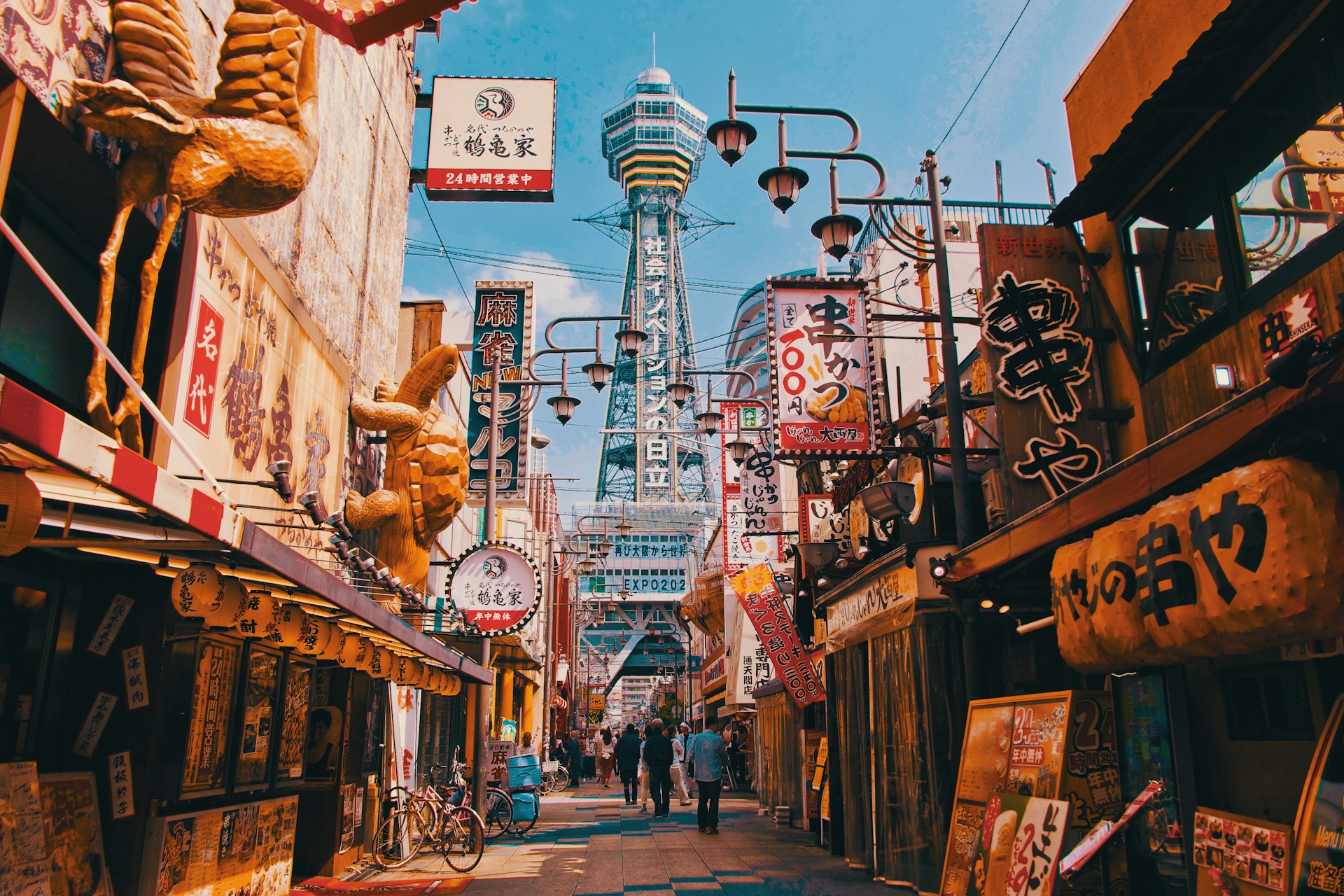
Two days in Osaka gives you enough time to see the city’s main highlights, eat well and experience its evening energy—provided you do not treat the trip as a race between disconnected attractions.
The biggest planning mistake is underestimating Osaka’s scale. Osaka Castle, Umeda, Shinsekai and Dotonbori may all appear close on a regional map, but moving between them takes time. Add a castle queue, a long lunch and an observation deck, and an apparently simple day can become rushed.
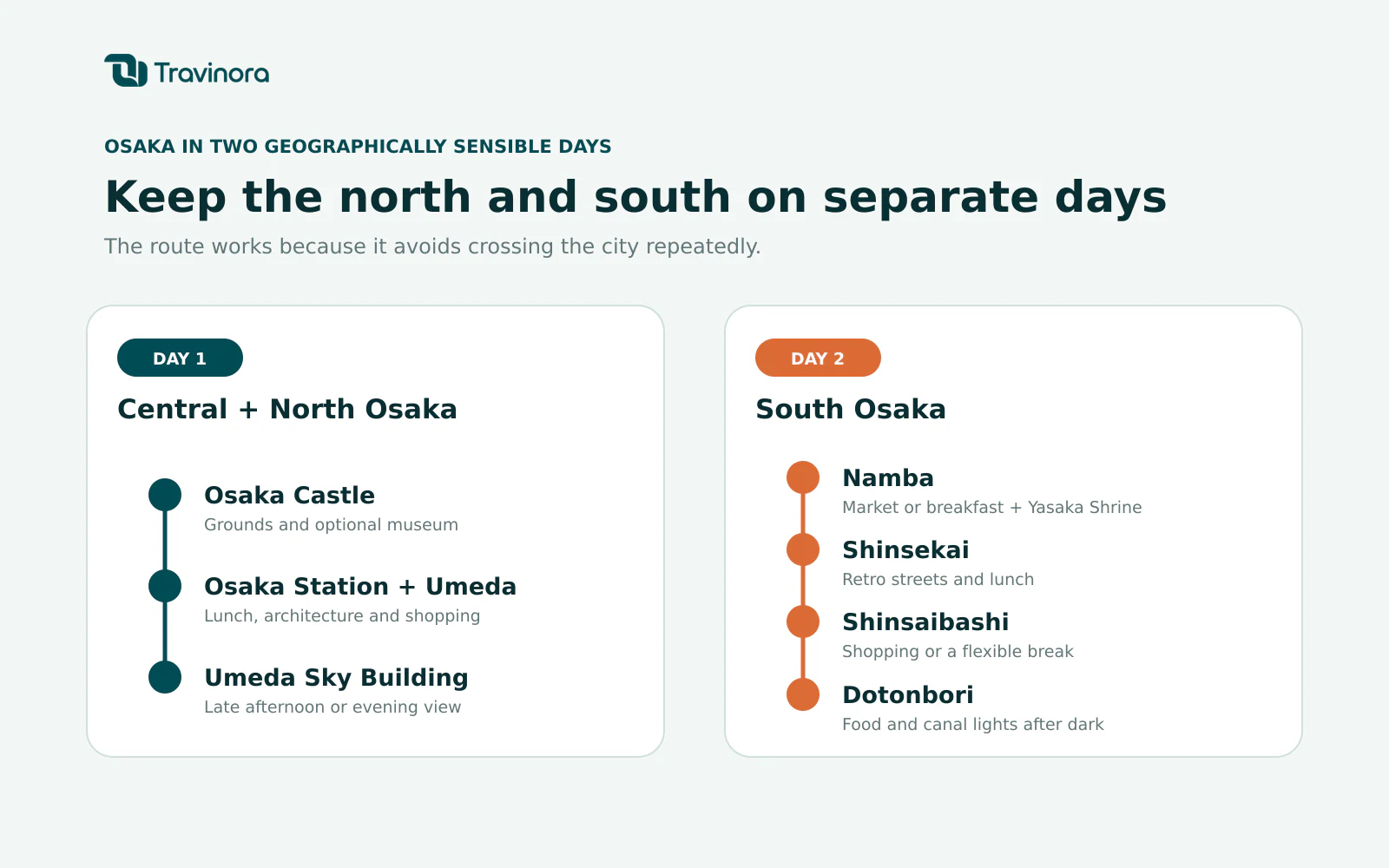
This itinerary avoids that problem by grouping Osaka geographically:
- Day 1: Osaka Castle and northern Osaka around Umeda
- Day 2: Namba, Shinsekai and Dotonbori in southern Osaka
It covers the places most first-time visitors expect without squeezing Universal Studios Japan, the aquarium or a day trip into the same two days.
Is two days enough in Osaka?
Yes. Two full days are enough to experience Osaka Castle, Umeda, Namba, Shinsekai and Dotonbori at a comfortable first-time pace. Add a third day if you want Universal Studios Japan, Osaka Aquarium Kaiyukan, a slower food-focused day or an excursion outside the city.
Two days works particularly well when Osaka follows a stay in Kyoto. Kyoto carries much of the temple-and-tradition side of the trip, while Osaka provides a contrasting mix of city views, markets, casual food and nightlife.
If you are still deciding where to base yourself, read our comparison of Kyoto vs Osaka for first-time visitors.
Two days in Osaka at a glance
Day | Areas | Main experiences | Approximate sightseeing window |
|---|---|---|---|
Day 1 | Osaka Castle and Umeda | Castle grounds, museum if wanted, Osaka Station area and Umeda Sky Building | 9:00 a.m.–8:00 p.m. |
Day 2 | Namba, Shinsekai and Dotonbori | Market, Namba Yasaka Shrine, retro Osaka, food and neon after dark | 9:00 a.m.–9:00 p.m. |
This is a framework, not a minute-by-minute obligation. Keep one flexible block each day for queues, meals, shopping or simply staying longer somewhere you enjoy.
Who this Osaka itinerary is for
This route is designed for:
- First-time visitors with two full days
- Travellers staying near Namba or Umeda
- People who want a mix of sightseeing, neighbourhoods and food
- Visitors continuing to or from Kyoto
- Travellers who prefer a realistic plan over an attraction checklist
It is not designed for travellers trying to include Universal Studios Japan. The park should receive its own day. It also leaves out Osaka Aquarium Kaiyukan because combining the Bay Area with the city’s central and southern neighbourhoods creates unnecessary travel in a short visit.
Day 1: Osaka Castle and Umeda
Day 1 combines central Osaka with the northern hub of Umeda. The two areas connect easily, and Umeda gives you plenty of weather-proof options if the afternoon changes.
9:00 a.m.–11:30 a.m.: Osaka Castle and its grounds
Start at Osaka Castle while the day is still relatively cool and before the surrounding park becomes busier.
Allow time to walk through the grounds rather than measuring the visit from the nearest station to the castle entrance. The park is extensive, and the approach past the moats and stone walls is part of the experience.
You have two sensible options:
Option 1: Visit the grounds only
Choose this if you mainly want exterior views, photographs and a walk through the park. Allow approximately 60–90 minutes, depending on your entry point and pace.
Option 2: Enter Osaka Castle Museum
Choose this if you are interested in the castle’s history and the elevated city views. The present interior functions as a museum rather than a preserved feudal castle.
The official castle website currently lists opening hours of 9:00 a.m. to 6:00 p.m., with last admission at 5:30 p.m. It closes from December 28 to January 1. Hours, admission and queue conditions can change, so check the official website before visiting.
Allow roughly two to two and a half hours for the park and museum together. During busy periods, the queue can make the visit longer.
Do not force the museum into the schedule if history displays are not a priority. Seeing the exterior and grounds leaves more time for Umeda later.
11:30 a.m.–12:15 p.m.: Travel towards Umeda
The exact route depends on where you leave Osaka Castle Park. Several stations serve different sides of the grounds, so use the exit closest to your next stop rather than automatically returning to your arrival station.
Treat this as a travel buffer rather than scheduling lunch immediately after your expected castle exit. Large parks often add more walking time than route planners suggest.
12:15 p.m.–1:30 p.m.: Lunch around Osaka Station
Osaka Station and the connected Umeda area contain department stores, underground dining streets, malls and restaurant floors. This makes Umeda a practical place for lunch without committing the itinerary to one specific restaurant.
Instead of crossing the district for a viral food recommendation, choose a restaurant close to where you arrive. The objective is to preserve time for the afternoon—not spend 45 minutes navigating a station complex for one dish.
1:30 p.m.–4:30 p.m.: Explore Umeda
Umeda is less immediately picturesque than Dotonbori, but it shows a different side of Osaka: modern, vertical and highly connected.
Choose one or two of the following rather than attempting all of them:
- Explore the architecture and public spaces around Osaka Station
- Browse Grand Front Osaka or another nearby shopping complex
- Walk through the developing green spaces and plazas around the station district
- Visit a department-store food hall
- Take a coffee break and leave time for the evening viewpoint
Osaka Station can be confusing even for experienced travellers. Build in a little time for finding the correct exit and do not assume two places described as “Umeda” are beside one another.
4:30 p.m.–6:30 p.m.: Umeda Sky Building
Walk to Umeda Sky Building for a late-afternoon or early-evening view.
The official website currently lists the Kuchu Teien Observatory as open from 9:30 a.m. to 10:30 p.m., with last admission at 10:00 p.m. Special operating days may have different arrangements.
Sunset is popular, so arrive earlier than the exact sunset time if you want a comfortable visit. Weather matters: on a hazy or rainy day, you may prefer to keep this stop short or replace it with another indoor experience around Umeda.
Allow approximately 90 minutes including entry, the indoor viewing floor and rooftop area.
6:30 p.m. onwards: Dinner in Umeda or an easy evening
Stay in Umeda for dinner rather than travelling to Dotonbori simply because it is famous. You will experience Dotonbori properly on Day 2, when it fits naturally with Namba and Shinsekai.
This quieter first evening also prevents the itinerary from repeating the same nightlife area twice.
If you still have energy, explore the streets around Osaka Station or visit a nearby bar. If not, finish early. Day 2 is more walking-heavy.
Day 1 timing summary
Time | Stop | Suggested duration |
9:00 a.m. | Osaka Castle grounds | 1–1.5 hours |
9:30/10:00 a.m. | Optional castle museum | Add 1–1.5 hours |
11:30 a.m. | Travel to Umeda | Around 30–45 minutes including walking |
12:15 p.m. | Lunch | About 1 hour |
1:30 p.m. | Umeda exploration | 2–3 hours |
4:30 p.m. | Umeda Sky Building | Around 1.5 hours |
6:30 p.m. | Dinner | Flexible |
Day 2: Namba, Shinsekai and Dotonbori
Day 2 stays in southern Osaka. The route moves from daytime market and neighbourhood stops towards Dotonbori, which is more atmospheric after dark.
9:00 a.m.–10:15 a.m.: Kuromon Market—or a slower breakfast
Begin around Kuromon Ichiba Market if food markets interest you. Walk through, browse the stalls and try one or two items rather than treating every popular stall as compulsory.
Kuromon is a functioning commercial market as well as a visitor attraction. Prices and opening patterns vary by vendor, and not every stall opens at exactly the same time.
If you dislike crowded food markets—or would rather have a calm breakfast—skip Kuromon. The itinerary still works without it. Start later near Namba and use the time for shopping or a longer lunch.
10:15 a.m.–11:00 a.m.: Walk through Namba
Move through the broader Namba area towards Namba Yasaka Shrine. This section gives you a look at the everyday commercial streets outside Dotonbori’s most photographed canal frontage.
Allow extra time if you stop in shops. Namba rewards wandering, but unplanned shopping is also the easiest way for this itinerary to fall behind.
11:00 a.m.–11:40 a.m.: Namba Yasaka Shrine
The shrine is best known for its enormous lion-head stage, which makes it visually distinct from the city’s commercial surroundings.
Official Osaka tourism information lists Namba Yasaka Shrine as approximately a six-minute walk from Namba Station, with the gates generally open from 6:00 a.m. to 5:00 p.m. and shrine business hours from 9:00 a.m. to 4:50 p.m. It is open year-round.
This is a short stop. Allow 20–30 minutes unless a ceremony or event is taking place. Be respectful: it remains an active place of worship, not only a photo location.
11:40 a.m.–12:15 p.m.: Travel to Shinsekai
Use the metro or walk part of the route depending on the weather and your energy. Saving your legs here can make the evening more enjoyable.
12:15 p.m.–2:30 p.m.: Shinsekai and lunch
Shinsekai offers a retro, informal contrast to modern Umeda. The district is associated with Tsutenkaku Tower, Janjan Yokocho and casual local food.
Walk through the main streets, look towards Tsutenkaku and stop for lunch. Kushikatsu—fried skewers—is closely associated with the area, but you do not need to queue for the most visible restaurant to have a good meal.
Should you go up Tsutenkaku Tower?
Only if observation decks are a priority.
Official Osaka tourism information currently lists the general observation deck as open from 9:00 a.m. to 9:45 p.m., with last entry at 9:15 p.m. and regular admission at ¥1,500. Verify current details before visiting.
If you visited Umeda Sky Building on Day 1, a second paid viewpoint may feel repetitive. In a two-day itinerary, most travellers should choose one:
- Umeda Sky Building for a modern skyline experience and rooftop atmosphere
- Tsutenkaku for the retro Shinsekai setting and local character
Skipping the tower leaves more time for the neighbourhood and Dotonbori later.
2:30 p.m.–3:15 p.m.: Optional Shitennoji or a rest break
At this point, choose according to your energy.
Option A: Visit Shitennoji
Shitennoji is one of Japan’s historically significant Buddhist temples and adds cultural depth to a day otherwise focused on commercial neighbourhoods and food.
Choose this option if you did not recently spend several days visiting temples in Kyoto.
Option B: Slow down
If Osaka follows Kyoto, another temple may not add much to your trip. Use this block for coffee, shopping, returning briefly to the hotel or spending more time in Shinsekai.
This optional block is what keeps the itinerary adaptable instead of exhausting.
3:15 p.m.–5:30 p.m.: Namba and Shinsaibashi
Return towards Namba and explore according to your interests:
- Browse Shinsaibashi-suji Shopping Street
- Explore side streets around Amerikamura
- Visit shops around Namba
- Stop at Hozenji Yokocho and its small temple area
- Take a break before the evening crowds
Do not over-plan this period. Osaka’s central districts work best when you have room to follow a street, browse a shop or stop for food without immediately checking the next timed entry.
5:30 p.m.–9:00 p.m.: Dotonbori after dark
Finish in Dotonbori when the signs are illuminated and the canal reflects the surrounding lights.
Official Osaka tourism describes Dotonbori as the symbolic commercial and shopping district of Minami. It is busy, bright and unapologetically touristy—but it is also an essential part of a first Osaka visit.
Walk along the canal, cross Ebisubashi, explore the Tonbori Riverwalk and have dinner nearby. The Riverwalk itself is free and accessible from the Namba area.
Avoid trying every famous Osaka food in one evening. Pick two or three priorities, such as:
- Takoyaki
- Okonomiyaki
- Kushikatsu if you skipped it in Shinsekai
- A sit-down dinner followed by one street-food snack
If you want more structure, this is the right evening for a food tour or guided walk because the experience replaces part of your self-guided dinner rather than competing with another major attraction.
Day 2 timing summary
Time | Stop | Suggested duration |
9:00 a.m. | Kuromon Market or breakfast | About 1 hour |
10:15 a.m. | Namba walk | 30–45 minutes |
11:00 a.m. | Namba Yasaka Shrine | 20–30 minutes |
11:40 a.m. | Travel to Shinsekai | Around 30 minutes |
12:15 p.m. | Shinsekai and lunch | Around 2 hours |
2:30 p.m. | Shitennoji or rest | Optional, 45–60 minutes |
3:30 p.m. | Namba and Shinsaibashi | Around 2 hours |
5:30 p.m. | Dotonbori and dinner | Flexible evening |
What does not fit comfortably into two days?
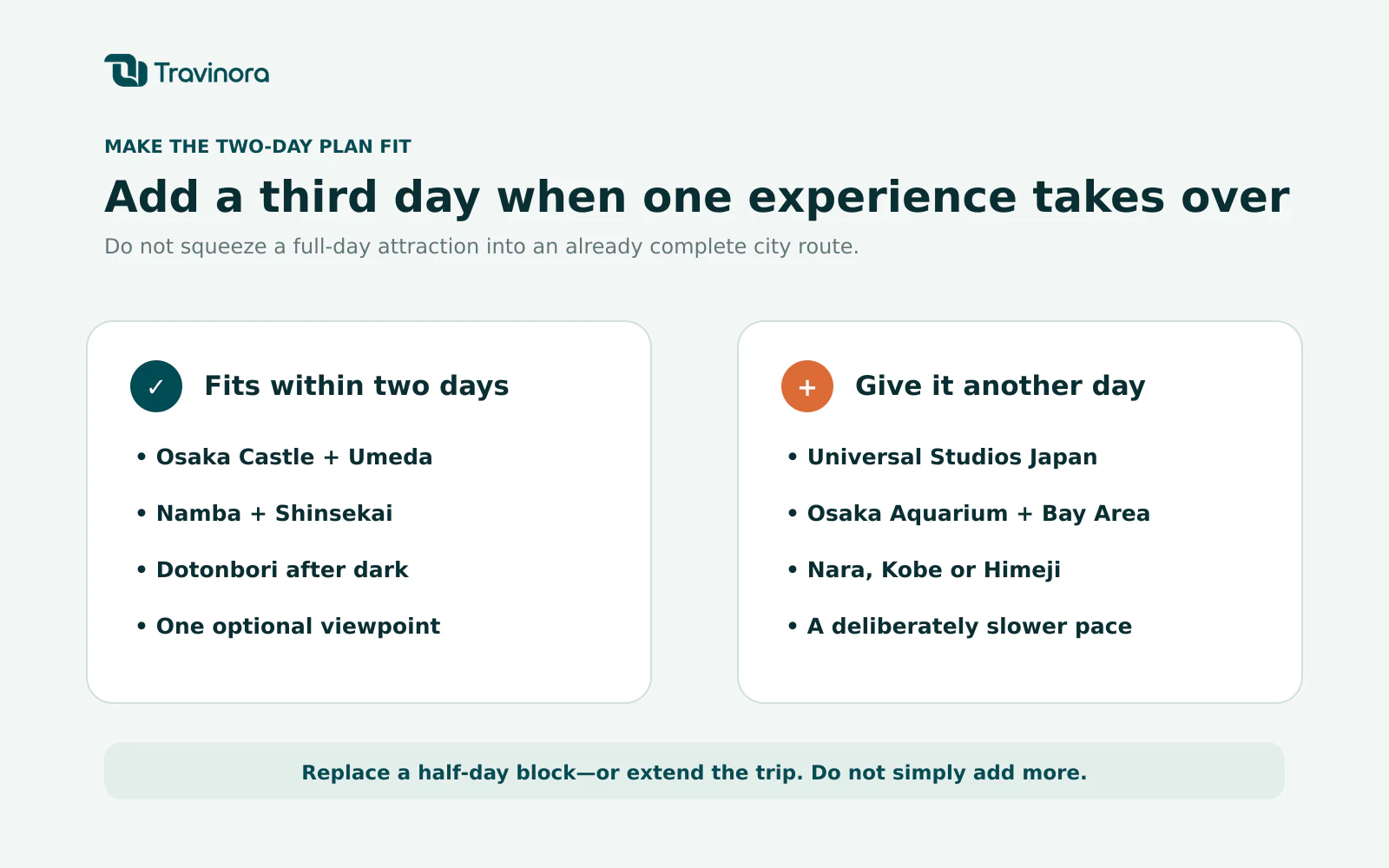
A realistic itinerary requires saying no to good places.
Universal Studios Japan
Give the park a dedicated day. Trying to combine it with Namba or Osaka Castle turns both experiences into abbreviated visits and makes the day dependent on unpredictable park queues.
Osaka Aquarium Kaiyukan and the Bay Area
The aquarium can fill a substantial part of a day once travel, admission and the surrounding Tempozan area are included. Add it only by replacing—not supplementing—one of this itinerary’s half-day blocks.
A full day trip
Nara, Kobe and Himeji are realistic excursions from Osaka, but a day trip means you are no longer spending two days in Osaka. Add a third night or accept that you will see less of the city.
Every observation deck
Umeda Sky Building, Tsutenkaku and other viewpoints offer different perspectives, but visiting several is rarely the best use of a short stay. Choose one.
A long list of viral restaurants
Restaurant queues can consume more of a two-day itinerary than transit. Keep a shortlist of alternatives in each neighbourhood instead of committing the entire route to one social-media-famous venue.
Two days versus three days in Osaka
Trip length | What it allows | Best for |
1 day | Namba, Dotonbori and one additional district | Travellers treating Osaka as a brief stop |
2 days | Main city highlights at a sensible pace | Most first-time visitors |
3 days | Add USJ, the aquarium, deeper neighbourhoods or a day trip | Families, theme-park visitors and slower travellers |
4+ days | Osaka plus multiple regional excursions | Travellers using Osaka as a Kansai base |
Two days is enough for Osaka itself. Three days becomes the better choice when one of the days has a single dominant attraction.
Where to stay for this two-day Osaka itinerary
Namba: best for food and evening atmosphere
Namba places you close to Dotonbori, Shinsaibashi and many restaurants. It is the most convenient choice if you want Osaka’s energy immediately outside your hotel.
It works especially well for Day 2, when you can finish in Dotonbori without a long journey back.
Umeda: best for regional transport
Umeda is useful for travellers arriving by JR, continuing to Kyoto or taking other Kansai day trips. The district has extensive shopping, dining and transport, although navigating its connected stations takes some adjustment.
Stay here if transport efficiency matters more than being beside Dotonbori.
Tennoji: a practical alternative
Tennoji provides useful connections and easier access to southern Osaka. It may offer a calmer base than Namba while remaining convenient for Shinsekai and other city areas.
Browse planning options in the Travinora Osaka guide.
Estimated transport and attraction costs
Your total depends on where you stay, which railway you use and whether you enter the paid viewpoints.
Budget for:
- Several local metro or rail journeys each day
- Osaka Castle Museum if entering
- One observation deck rather than several
- Food, shopping and any guided experience
Osaka Metro offers individual fares and several pass products. Official information currently lists an Enjoy Eco Card with unlimited eligible Osaka Metro and Osaka City Bus rides for one day, with different weekday and weekend/holiday pricing. Digital 26-hour and 48-hour products are also available for specific sales and validity periods.
Do not buy a pass automatically. Compare its current price and coverage with the journeys you will actually make. Some JR and private railway trips are not covered by metro-only passes.
How to make two days in Osaka feel less rushed
Stay near a useful station
A hotel that is five minutes from Namba or Osaka Station can save more usable time than a cheaper room requiring multiple local connections.
Choose one viewpoint
Umeda Sky Building and Tsutenkaku are both worthwhile, but one is enough for most two-day visits.
Leave one flexible block each day
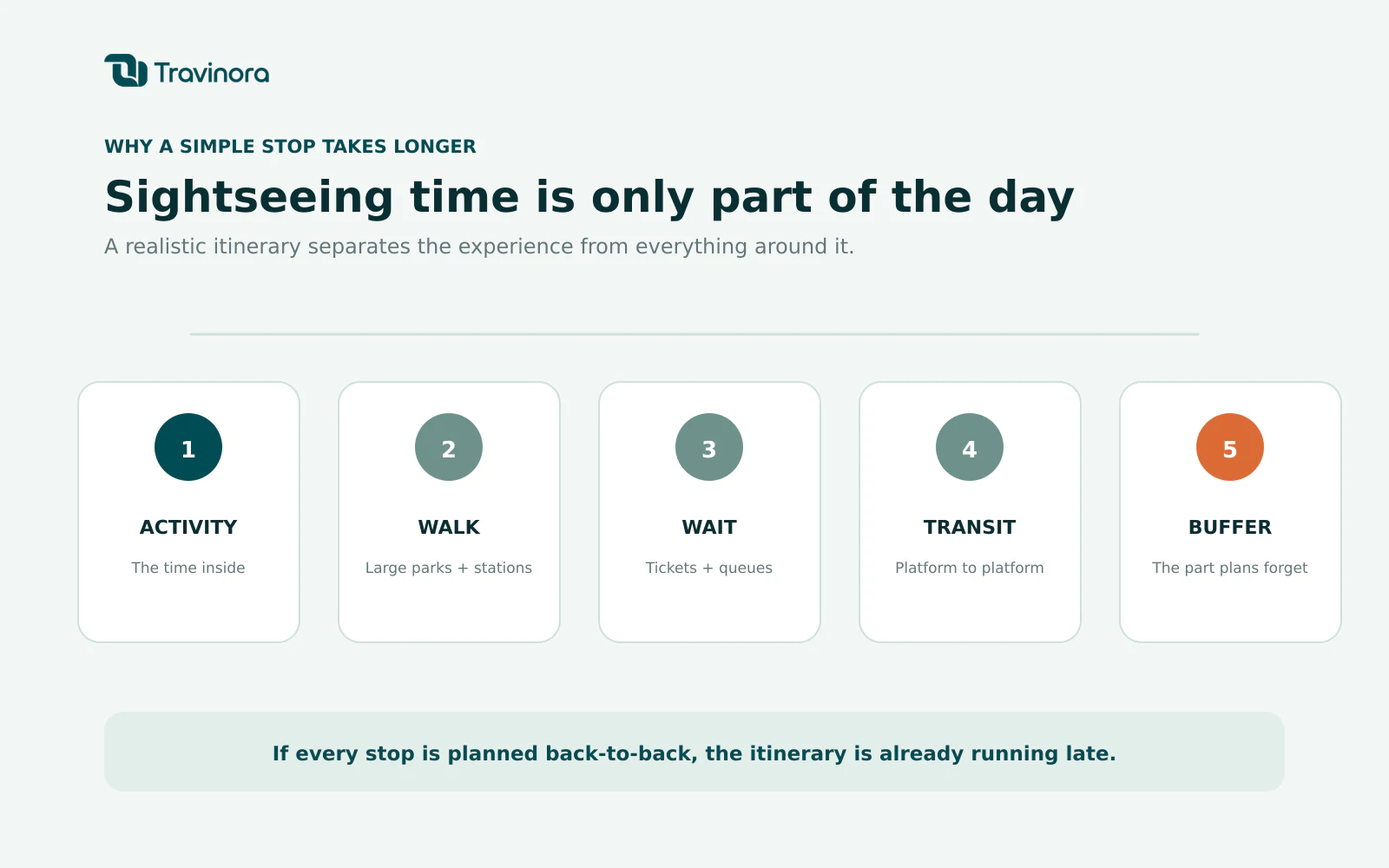
Queues, weather and spontaneous meals are part of travel. A plan with no free time is already behind schedule before the day begins.
Separate activity time from travel time
“One hour at Osaka Castle” should not include the walk across the park, ticket queue and journey to the next station.
Plan Dotonbori for the evening
This gives the district its strongest atmosphere and stops you from travelling there twice simply to see it in daylight and after dark.
Build the route before you book everything
A list of Osaka attractions can look manageable until the travel gaps are added.
Use Travinora’s trip planner to place activities into your day, compare their durations and see the movement between stops. If the route becomes too dense, remove an attraction before you arrive—not while standing in a station deciding what to sacrifice.
Final verdict: is two days in Osaka enough?
Two full days are enough for a rewarding first visit to Osaka. Spend one day around Osaka Castle and Umeda, then keep the second day in the southern districts of Namba, Shinsekai and Dotonbori.
The schedule works because it groups nearby areas and leaves optional stops optional.
Add another day if you want Universal Studios Japan, Osaka Aquarium Kaiyukan, a substantial day trip or a slower pace. Otherwise, two days gives you a satisfying introduction without turning Osaka into a checklist.
Frequently asked questions
Is two days enough for Osaka on a first trip to Japan?
Yes. Two full days are enough for Osaka Castle, Umeda, Namba, Shinsekai and Dotonbori if you group nearby areas. Add a third day for Universal Studios Japan, the aquarium or an excursion.
Is one day enough for Osaka?
One day is enough for a limited introduction, usually focused on Namba, Dotonbori and one additional area. It is not enough to experience both northern and southern Osaka comfortably.
Should I spend two or three days in Osaka?
Choose two days for the central city highlights. Choose three if Universal Studios Japan, Osaka Aquarium Kaiyukan, a day trip or slower food exploration is important.
Can I visit Osaka Castle and Dotonbori on the same day?
Yes. They can fit into one day, but this itinerary separates them to create better geographic groupings: Osaka Castle with Umeda, and Dotonbori with Namba and Shinsekai.
Should I visit Osaka Castle Museum or only the grounds?
Enter the museum if you are interested in Osaka’s history and city views. If you mainly want exterior photographs and park scenery, seeing the grounds can save one to two hours.
Is Dotonbori better during the day or at night?
Dotonbori is more atmospheric after dark when the signs and canal reflections are illuminated. Plan daytime sightseeing elsewhere and finish there for dinner.
Is it better to stay in Namba or Umeda for two days?
Namba is better for food, nightlife and proximity to Dotonbori. Umeda is better for JR connections, regional travel and the Osaka Station area. Both work for this route.
Can I include Universal Studios Japan in a two-day Osaka itinerary?
You can, but it will use most or all of one day. Treat the result as one Osaka sightseeing day plus one USJ day—not two full days exploring Osaka.
Data check
Based on the research done by Travinora team, checked August 2026.
Discover real, bookable experiences in Osaka — honest prices and ratings, never a sponsored spot.
Explore destinations